Which EV Brands Last? Battery Degradation Statistics Revealed
Electric vehicle (EV) battery degradation is a crucial topic for prospective and current owners, influencing long-term range, performance, and resale value. Understanding how EV batteries lose capacity over time, and critically, how different brands perform, is essential for informed decision-making. This comprehensive guide delves into the intricacies of battery degradation, examining the factors that influence it and presenting real-world statistics by various electric vehicle manufacturers.
The transition to electric mobility hinges significantly on battery longevity and reliability, making degradation a primary concern for consumers. We will explore the science behind battery aging, dissecting data from reputable sources to offer a clear picture of what EV owners can expect from their vehicles over years of use. This analysis aims to demystify battery health, providing actionable insights into brand-specific degradation trends.
Understanding Electric Vehicle Battery Degradation
Battery degradation refers to the irreversible loss of a battery’s maximum energy storage capacity and its ability to deliver current, occurring gradually over its lifespan. This process essentially means that a battery can hold less charge and might exhibit reduced power output compared to when it was new. It is a natural phenomenon inherent to all rechargeable batteries, including the advanced lithium-ion chemistries used in electric vehicles.
What is Battery Degradation?
At its core, battery degradation involves complex electrochemical and physical changes within the battery cells. These changes include the formation of a Solid Electrolyte Interphase (SEI) layer on the anode, lithium plating, and cracking of electrode materials, all of which reduce the amount of lithium ions available for charge and discharge cycles. This diminished capacity directly translates to a shorter driving range for electric vehicles over time. Additionally, internal resistance within the battery can increase, impacting charging speed and overall power delivery.
Key Metrics of Battery Health
The primary metric used to track battery health is the State of Health (SOH), typically expressed as a percentage of the original capacity. A new battery starts at 100% SOH, and as it degrades, this percentage decreases, indicating the remaining usable capacity. Another important aspect is cycle life, which refers to the number of full charge-discharge cycles a battery can undergo before its capacity drops below a certain threshold, often 80% of its initial capacity. Understanding these metrics helps owners and researchers quantify the actual degradation rate of an EV’s power source.
Fundamental Factors Driving Battery Degradation
While degradation is inevitable, its rate can vary significantly depending on a multitude of factors related to usage, environment, and the battery’s design and management. These external and internal influences combine to accelerate or mitigate the aging process, directly affecting the vehicle’s long-term performance. Recognizing these factors empowers owners to adopt practices that promote battery longevity.
Charging Habits and Their Impact
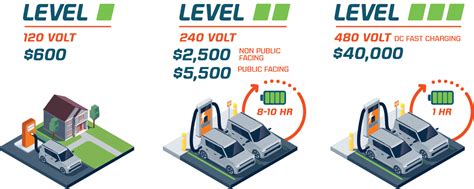
The way an EV is charged plays a substantial role in its battery’s health over time. Frequent use of DC fast charging, while convenient, can generate more heat and stress on the battery cells, potentially accelerating degradation compared to slower AC charging methods. Regularly charging a battery to 100% and discharging it to very low levels (below 10-20%) also places greater strain on the cell chemistry, contributing to faster capacity loss. Maintaining a charge window, such as between 20% and 80% for daily use, is often recommended to extend battery life.
Environmental Conditions: The Temperature Factor
Extreme temperatures, both hot and cold, are detrimental to battery health. High temperatures accelerate the chemical reactions that cause degradation, leading to quicker capacity loss, especially when combined with high states of charge or fast charging. Conversely, very cold temperatures temporarily reduce battery performance and can also contribute to degradation over time, particularly during charging. Effective thermal management systems are therefore critical for maintaining optimal battery operating temperatures and mitigating these environmental stressors.
Battery Chemistry and Design
Different lithium-ion battery chemistries exhibit varying degradation characteristics. For example, Nickel Manganese Cobalt (NMC) and Nickel Cobalt Aluminum (NCA) batteries, commonly found in many EVs, offer high energy density but can be more susceptible to degradation from high temperatures and charging at 100%. Lithium Iron Phosphate (LFP) batteries, gaining popularity, are generally more robust to full charges and offer a longer cycle life, albeit with slightly lower energy density. The physical design, including cell format (pouch, prismatic, cylindrical) and pack architecture, also influences thermal dissipation and overall durability. The voltage window also impacts degradation; shallower discharges are generally better for longevity.
The Role of Battery Management Systems (BMS)
An advanced Battery Management System (BMS) is arguably the most crucial component for battery longevity. This sophisticated electronic system monitors cell voltages, temperatures, and currents, ensuring the battery operates within safe parameters and preventing overcharge, over-discharge, and overheating. A well-engineered BMS actively balances cells, manages thermal conditions, and precisely controls charging and discharging, significantly extending the battery’s useful life and mitigating degradation. Without a robust BMS, even the best battery chemistry would degrade rapidly.
Electric Vehicle Battery Degradation Statistics by Brand
Real-world data, collected from thousands of vehicles over several years, provides the most insightful statistics on battery degradation. While individual results can vary based on owner behavior and environmental factors, general trends emerge that highlight the performance of different EV brands. These trends showcase the varying effectiveness of battery chemistries, thermal management, and BMS strategies employed by manufacturers.
Tesla: Pushing the Boundaries of Longevity
Tesla vehicles, particularly the Model S, Model X, and later the Model 3 and Model Y, have demonstrated impressive battery longevity in real-world studies. Data from various sources, including studies by Geotab and reports from Tesla itself, suggest an average degradation of around 10% after 100,000 to 150,000 miles, and often less. This robust performance is attributed to sophisticated thermal management systems, advanced BMS software, and large battery packs that reduce the depth of discharge during typical driving. Early Model S batteries, for instance, have shown remarkable resilience, often retaining over 85% capacity after 200,000 miles. Their continuous over-the-air updates also improve battery management algorithms over time. The introduction of LFP batteries in some Standard Range models further enhances longevity potential for daily charging to 100%.
Nissan: Evolution from Early Challenges
The first generation Nissan Leaf, particularly models sold in hot climates, became infamous for relatively higher rates of battery degradation. This was largely due to its passive air-cooled battery pack, which struggled to dissipate heat effectively, especially during frequent rapid charging or in high ambient temperatures. Later generations of the Leaf, and subsequent Nissan EVs, have seen significant improvements in battery chemistry and thermal management, leading to better degradation profiles. While still typically showing slightly higher degradation than some actively cooled competitors, newer Leaf models are considerably more resilient, benefiting from revised cell designs. The lack of an active liquid cooling system for many Leaf models remains a point of distinction when comparing long-term degradation.
Chevrolet: Consistent Performance
Chevrolet’s electric vehicles, such as the Bolt EV and the Volt (a plug-in hybrid with a substantial electric range), have generally demonstrated consistent and respectable battery degradation rates. The Bolt EV, for example, features an active liquid-cooled battery system, which effectively manages temperature and contributes to better long-term health. Owners often report degradation in the low single digits for the first few years, with overall capacity loss aligning with industry averages or even outperforming them for many vehicles. The focus on robust engineering and efficient thermal management in GM’s EV offerings has paid off in reliable battery performance. The proactive approach to battery recalls and software updates also ensures safety and optimizes longevity.
Hyundai and Kia: Strong Contenders
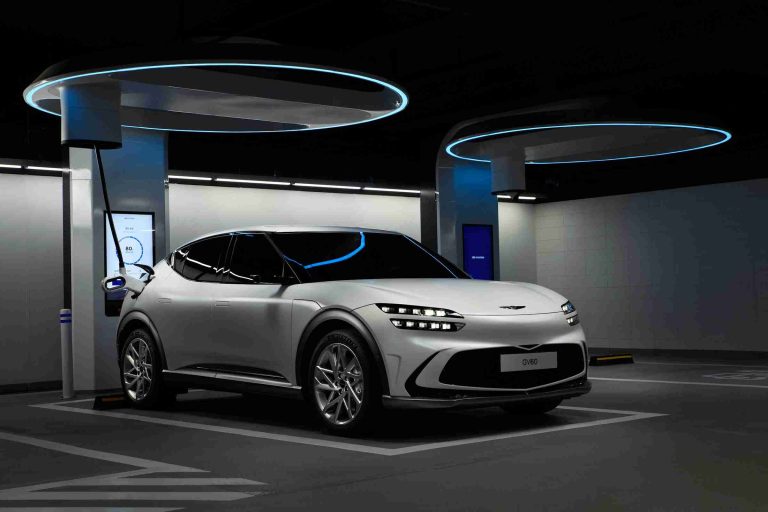
Hyundai and Kia, with popular models like the Kona Electric, Ioniq Electric, Niro EV, EV6, and Ioniq 5, have consistently shown strong battery performance and low degradation rates. These brands utilize advanced liquid-cooling systems and sophisticated BMS, which are crucial for maintaining battery health. Studies often place them among the top performers in terms of battery longevity, with degradation typically falling within the 5-10% range after several years and significant mileage. Their aggressive push into the EV market has been backed by solid battery engineering, providing confidence to owners regarding long-term range retention. These vehicles often feature pre-heating and pre-cooling functions to optimize battery temperature before charging or driving. Their latest E-GMP platform further emphasizes thermal stability and fast charging capabilities without compromising longevity.
Premium European Brands: Engineering for Endurance
Luxury electric vehicles from brands like BMW (i3, i4, iX), Audi (e-tron, Q4 e-tron), Mercedes-Benz (EQC, EQS, EQE), and Porsche (Taycan) are engineered with high-quality components and robust thermal management systems. Unsurprisingly, their batteries generally exhibit excellent degradation characteristics, often comparable to or even surpassing Tesla in some metrics. These vehicles frequently feature oversized cooling systems and highly refined BMS software designed to protect the battery under demanding conditions. While their mileage accumulation might be lower on average compared to mass-market EVs, existing data suggests minimal capacity loss over several years of ownership. This reflects a commitment to high-performance and durability inherent in their premium market positioning. Their battery packs are typically over-engineered for daily use, providing a buffer against accelerated degradation.
Ford and Newer Entrants: Promising Initial Results
Newer entrants and legacy automakers expanding their EV lineups, such as Ford with the Mustang Mach-E and F-150 Lightning, Rivian, and Lucid, are building upon existing knowledge and technology. Early data for these vehicles is promising, with their modern battery architectures incorporating liquid cooling and advanced management systems. Ford’s Mach-E, for instance, has shown good battery health performance in initial reports, indicating that newer EV designs are benefiting from industry best practices regarding degradation mitigation. As these vehicles accumulate more miles and years, a more comprehensive long-term picture will emerge, but current trends are positive. Lucid Air, with its emphasis on efficiency and thermal control, is also expected to demonstrate excellent battery longevity. The use of robust battery packs designed for specific use cases, like towing in the F-150 Lightning, further enhances their potential for long-term durability.
Interpreting Real-World Data and Averages
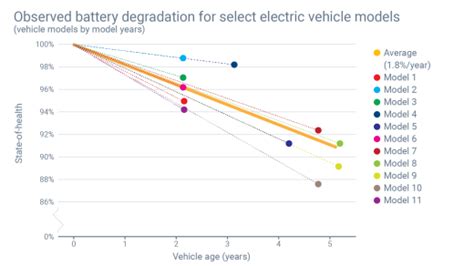
When evaluating degradation statistics, it’s crucial to consider the source and methodology of the data. Many studies rely on aggregated telematics data, which provides a broad overview but may not capture all individual use cases. On average, most modern EV batteries are designed to retain 70-80% of their original capacity after 8-10 years or 100,000-150,000 miles, which is also typically covered by manufacturer warranties. A degradation rate of less than 1-2% per year is generally considered very good, demonstrating the increasing reliability and longevity of current EV battery technology. While some individual batteries may deviate, the overwhelming evidence suggests that concerns about rapid, debilitating degradation are largely unfounded for modern EVs. Furthermore, the perceived impact of degradation on daily driving range might be less significant than expected for most commuters.
Mitigating Battery Degradation: Tips for EV Owners
While manufacturers design EVs to minimize degradation, owners can adopt several practices to further extend their battery’s life. These tips focus on managing charging habits and environmental exposure, giving drivers more control over their vehicle’s long-term health. Proactive maintenance and thoughtful usage contribute significantly to battery longevity.
Firstly, avoid frequent DC fast charging unless absolutely necessary; prioritize slower AC charging at home or work whenever possible. Secondly, try to keep your battery’s state of charge within the 20-80% range for daily driving, only charging to 100% when you need the full range for a long trip. Thirdly, park your EV in the shade during hot weather and avoid prolonged exposure to extreme cold, if feasible. Fourthly, avoid deep discharges (driving until the battery is nearly empty) and very aggressive driving, which can stress the battery. Lastly, consult your vehicle’s manual for specific manufacturer recommendations on charging and care, as these can vary by model. Some EVs also offer battery preconditioning features that help optimize temperature before charging or driving in cold conditions.
The Assurance of Battery Warranties
Most electric vehicle manufacturers provide extensive warranties on their battery packs, offering peace of mind to consumers regarding long-term degradation. These warranties typically guarantee that the battery will maintain a certain percentage of its original capacity (e.g., 70% or 80%) for a specified period or mileage, commonly 8 years or 100,000 miles. Should a battery degrade beyond this threshold within the warranty period, the manufacturer is obligated to repair or replace it at no cost to the owner. This industry standard reflects manufacturers’ confidence in the durability and longevity of their battery technology, further alleviating concerns about significant capacity loss. Some brands offer even longer warranties in specific regions, such as 10 years or 150,000 miles. These warranties protect against manufacturing defects and excessive capacity loss, ensuring a baseline level of performance over the vehicle’s initial lifespan.
Future Outlook for EV Battery Longevity
The field of battery technology is continuously advancing, with ongoing research and development promising even greater longevity and performance in the future. Innovations in battery chemistry, such as improved solid-state batteries, and advancements in thermal management and BMS algorithms, are expected to further reduce degradation rates. As manufacturing processes become more refined and economies of scale grow, the cost of these durable batteries is also expected to decrease. This continuous improvement ensures that future generations of electric vehicles will offer even better battery health and extended useful lifespans. Emerging technologies like silicon anodes and new electrolyte formulations are being explored to boost energy density and improve cycle life significantly. The push towards more sustainable battery materials and manufacturing processes also plays a role in enhancing overall battery resilience and lifespan.
Conclusion: A Landscape of Enduring Power
The data unequivocally demonstrates that modern electric vehicle batteries are highly durable and exhibit significantly lower degradation rates than many initial public perceptions suggested. While some brands have shown stronger performance than others, particularly due to advanced thermal management systems, the overall trend across the industry is towards reliable and long-lasting battery packs. Concerns about rapid battery degradation should no longer be a primary deterrent for considering an EV purchase. With proper care and the continuous advancements in battery technology, electric vehicles are proving to be a sustainable and dependable transportation solution for years to come. The longevity of EV batteries, backed by robust warranties and ongoing innovation, is a testament to the maturation of electric vehicle technology. This evolution provides increasing confidence for consumers looking to embrace an electric future.
Frequently Asked Questions (FAQ)
What is EV battery degradation?
EV battery degradation is the natural, irreversible loss of a battery’s maximum energy storage capacity and power output over time. This means the battery can hold less charge and may deliver less power compared to when it was new, resulting in a shorter driving range.
How much does an EV battery degrade on average?
On average, modern EV batteries are designed to retain 70-80% of their original capacity after 8-10 years or 100,000-150,000 miles. Many vehicles, particularly those with advanced thermal management, show even better performance, often degrading by only 10% or less over the same period.
Which EV brands have the best battery longevity?
Brands like Tesla, Hyundai, Kia, BMW, Audi, and Chevrolet generally show excellent battery longevity with low degradation rates, often attributed to sophisticated liquid-cooling systems and advanced Battery Management Systems (BMS). Newer entrants like Ford (Mach-E, F-150 Lightning) also show promising early results.
Does fast charging degrade EV batteries faster?
Frequent use of DC fast charging can contribute to slightly faster battery degradation compared to slower AC charging, primarily due to the increased heat generated and higher stress on the battery cells. It’s generally recommended to prioritize slower charging for daily use and reserve fast charging for longer trips.
How can I extend my EV battery’s life?
To extend your EV battery’s life, try to keep its charge level between 20% and 80% for daily driving, avoid frequent fast charging, and protect the battery from extreme temperatures (both hot and cold). Also, avoid consistently driving until the battery is nearly empty, and follow your manufacturer’s specific recommendations.
What is an EV battery warranty?
Most EV manufacturers offer a battery warranty, typically guaranteeing that the battery will retain at least 70% or 80% of its original capacity for 8 years or 100,000 miles. If the battery degrades beyond this threshold within the warranty period, the manufacturer will repair or replace it.
Are older Nissan Leaf batteries prone to more degradation?
Yes, older generations of the Nissan Leaf, particularly those without active liquid cooling systems, were known to experience higher rates of battery degradation, especially in hot climates. Newer Leaf models have seen improvements in battery chemistry and thermal management, offering better longevity.