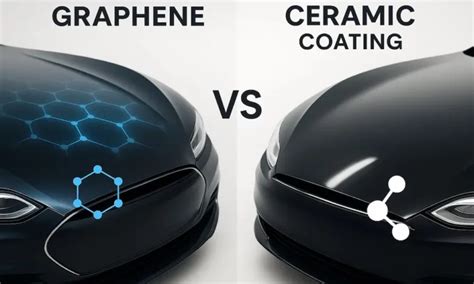
Ceramic Coating vs Graphene: Ultimate Car Paint Protection Guide
Protecting your car’s paintwork is crucial for maintaining its aesthetic appeal and resale value over time. In the world of automotive detailing, two advanced solutions often stand out: ceramic coatings and graphene coatings.
Both promise superior protection and shine, but they utilize different technologies and offer distinct advantages. This comprehensive guide will delve into the intricacies of each, helping you understand their mechanisms, benefits, drawbacks, and ultimately, which might be the best choice for your vehicle.
Understanding Traditional Ceramic Coatings
Ceramic coating, also known as nano-ceramic coating or glass coating, is a liquid polymer applied by hand to the exterior of a vehicle. This coating chemically bonds with the factory paint, creating a protective layer.
It is typically composed of silicon dioxide (SiO2), a primary component of quartz and glass, which forms an incredibly durable and transparent shield. This robust layer offers enhanced protection against various environmental contaminants and minor abrasions.
How Ceramic Coatings Work
When applied, the ceramic coating forms a semi-permanent bond with the car’s clear coat. This creates a hydrophobic surface that repels water, making it bead up and roll off easily.
The hydrophobic effect also carries dirt and grime away, making the car much easier to clean. Furthermore, the hard ceramic layer provides significant resistance against UV damage, oxidation, chemical stains, and etching from bird droppings or tree sap.
Benefits of Ceramic Coatings
Ceramic coatings offer a multitude of advantages that appeal to car owners seeking long-term paint protection. Firstly, they deliver an unparalleled gloss and depth to the paint, enhancing the car’s aesthetic significantly.
Secondly, their strong hydrophobic properties mean water and contaminants struggle to adhere to the surface, simplifying washing and maintenance. This protective layer also acts as a sacrificial barrier, safeguarding the original paint from minor scratches and swirls, though it is not completely scratch-proof.
Drawbacks of Ceramic Coatings
Despite their numerous benefits, ceramic coatings do have some limitations. The initial application process is intricate and time-consuming, requiring thorough paint correction and preparation for optimal bonding and finish.
Professional application can be expensive, and a poorly applied DIY coating can result in streaks or high spots. Moreover, while highly hydrophobic, traditional ceramic coatings can sometimes be susceptible to water spots, particularly in areas with hard water, if not properly dried after washing.
Exploring Graphene Coatings
Graphene coating is a relatively newer entrant to the automotive detailing market, often hailed as the next generation of paint protection. It is essentially a ceramic coating infused with graphene oxide or reduced graphene oxide (rGO) nanoparticles.
Graphene itself is a single layer of carbon atoms arranged in a hexagonal lattice, renowned for being one of the strongest and thinnest materials known to humankind, along with its excellent electrical and thermal conductivity.
How Graphene Coatings Work
By incorporating graphene into a ceramic base, manufacturers aim to enhance the existing properties of ceramic coatings. The graphene platelets create a more uniform and robust matrix within the coating, improving its structural integrity and flexibility.
This infusion reportedly results in a higher contact angle for water, leading to even greater hydrophobicity, and significantly reduces the surface’s static charge, which helps repel dust and dirt more effectively.
Benefits of Graphene Coatings
Graphene coatings boast several enhanced benefits over their ceramic counterparts. They typically offer superior hardness and improved resistance to micro-scratches and swirls due to graphene’s incredible strength.
One of the most significant advantages is their enhanced resistance to water spotting, a common issue with traditional ceramics, thanks to their improved dispersion of heat and reduced surface tension. Additionally, the anti-static properties help keep the car cleaner for longer by repelling dust and fine particles.
Drawbacks of Graphene Coatings
As a newer technology, graphene coatings come with their own set of considerations. They generally have a higher price point than ceramic coatings, reflecting their advanced formulation and potential performance enhancements.
The long-term durability and performance claims are still being extensively tested in real-world conditions, as the technology has not been as widely adopted or studied for as long as ceramic coatings. Availability of experienced applicators might also be limited compared to ceramic coating specialists.
Key Differences: Ceramic Coating vs Graphene Coating
While both coatings aim to protect your car’s paint, understanding their specific distinctions is crucial for an informed decision. The core differences lie in their chemical composition and the resultant performance characteristics.
Here’s a detailed comparison of critical aspects:
Hardness and Scratch Resistance
Both coatings add a significant layer of hardness to your car’s paint, measured on the pencil hardness scale (e.g., 9H). Graphene coatings, however, are often marketed as providing an even higher level of hardness and flexibility due to the graphene’s atomic structure, potentially offering marginally better resistance to swirls and light scratches.
It’s important to remember that neither coating makes your car scratch-proof; they reduce the likelihood and severity of minor damage. Deep scratches from keys, rocks, or accidents will still penetrate the coating and the paint.
Hydrophobicity and Self-Cleaning Properties
Both ceramic and graphene coatings excel in creating a hydrophobic surface, causing water to bead up and roll off. Graphene coatings typically achieve a higher water contact angle, meaning water beads are even more spherical and slide off with greater ease.
This enhanced hydrophobicity often translates to superior self-cleaning capabilities, as more dirt and grime are carried away with the water. The anti-static properties of graphene also play a role in repelling dust and pollen, keeping the vehicle cleaner for longer periods.
Resistance to Water Spotting
One of the most frequently cited advantages of graphene coatings is their improved resistance to water spotting. Traditional ceramic coatings, despite their hydrophobic nature, can sometimes leave mineral deposits from hard water if not dried properly, especially in direct sunlight.
Graphene’s unique properties, including better heat dissipation and reduced surface temperature, help mitigate this issue by preventing minerals from baking onto the surface, making water spots less likely to form and easier to remove.
Durability and Longevity
Ceramic coatings typically offer durability ranging from 2 to 5 years, depending on the product, application quality, and maintenance. Graphene coatings aim to surpass this, with many manufacturers claiming lifespans of 5 to 10 years or even more.
While these claims are promising, the long-term data for graphene coatings is still accumulating, given their relative newness in the market. Consistent proper maintenance is crucial for maximizing the lifespan of either coating.
Application Process and Cost
The application process for both ceramic and graphene coatings is quite similar, demanding extensive paint preparation including washing, decontamination, and often paint correction. This meticulous preparation is vital for the coating to bond correctly and achieve a flawless finish.
Professional application costs for graphene coatings are generally higher than for ceramic coatings, reflecting the advanced material and newer technology involved. DIY options exist for both, but professional installation is highly recommended to ensure proper results and maximize durability.
Maintenance of Coated Vehicles
Applying a ceramic or graphene coating is not a ‘set it and forget it’ solution; proper maintenance is essential to preserve their protective properties and extend their lifespan. Regular washing using pH-neutral car soaps is crucial, avoiding harsh chemicals or abrasive materials that could compromise the coating.
It is also recommended to use dedicated coating-safe car wash shampoos and microfiber towels to prevent scratching. Periodic ‘booster’ or ‘top coat’ products, often recommended by manufacturers, can help maintain the coating’s hydrophobic properties and gloss.
Factors to Consider When Choosing
Deciding between ceramic and graphene coating depends on several individual factors and preferences. Your budget, desired level of protection, specific environmental conditions, and long-term expectations should all influence your choice.
Consider the investment you’re willing to make, both for the initial application and ongoing maintenance, and assess whether the enhanced benefits of graphene justify its higher cost for your particular needs.
Budget and Investment
Ceramic coatings represent a significant initial investment, but graphene coatings typically command an even higher price. Evaluate your budget carefully and consider the long-term value both options provide in terms of paint protection and reduced maintenance.
Remember that the cost isn’t just for the product itself, but also for the meticulous preparation and professional application required for optimal results.
Desired Protection and Durability
If you’re seeking the absolute peak of current paint protection technology with potentially longer durability and enhanced resistance to water spotting, graphene might be the preferred choice. For excellent, proven protection at a slightly lower price point, ceramic coating remains an outstanding option.
Both coatings provide a far superior protective barrier compared to traditional waxes and sealants. Ultimately, the choice depends on your specific priorities and how much you value marginal improvements in performance.
Environmental Conditions and Usage
Consider your driving environment; if you frequently encounter hard water, live in an area prone to dust, or experience significant UV exposure, graphene’s enhanced water spot resistance and anti-static properties could be particularly beneficial. For daily drivers exposed to various elements, the extra layer of resilience might be worth the investment.
However, for garage queens or vehicles driven less frequently, the additional benefits of graphene might be less critical. Regular car washing and prompt drying are key, regardless of the coating type, especially in challenging environments.
The Future of Car Coatings
The automotive detailing industry is constantly evolving, with new technologies and formulations emerging regularly. Graphene coatings are a testament to this innovation, pushing the boundaries of what’s possible in paint protection.
We can expect further advancements in coating durability, ease of application, and specialized properties as research and development continue to leverage nanomaterials. These ongoing innovations promise an even brighter future for vehicle protection, offering increasingly sophisticated solutions for car enthusiasts and everyday drivers alike.
Conclusion
Both ceramic and graphene coatings offer exceptional levels of paint protection, far surpassing traditional waxes and sealants. Ceramic coating provides a tried-and-true, durable, and aesthetically pleasing protective layer with excellent hydrophobic properties.
Graphene coating builds upon this foundation, offering enhanced hardness, superior water spot resistance, and anti-static properties, albeit at a higher cost. The ‘best’ coating ultimately depends on your specific needs, budget, and desired performance characteristics.
Regardless of your choice, investing in either of these advanced coatings will significantly enhance your vehicle’s appearance and protect its paintwork for years to come. Always ensure professional application and adhere to proper maintenance guidelines for optimal results and longevity.
Frequently Asked Questions (FAQ)
Is graphene coating truly better than ceramic coating?
Graphene coatings are generally considered an evolution of ceramic coatings, offering enhanced properties such as superior water spot resistance, anti-static capabilities, and potentially greater hardness and durability. While ‘better’ can be subjective, many experts and users find graphene to offer marginal but significant improvements in key areas, especially reducing common issues like water spotting.
How long do ceramic and graphene coatings typically last?
The lifespan of both coatings varies depending on the product quality, application, and maintenance. Ceramic coatings typically last between 2 to 5 years. Graphene coatings, being newer and often more advanced, claim to last longer, with some manufacturers suggesting 5 to 10 years or even more, though long-term data is still being gathered.
Can I apply ceramic or graphene coating myself?
While DIY kits are available for both types of coatings, professional application is highly recommended. The process requires meticulous paint preparation, including washing, decontamination, and often paint correction, to ensure proper bonding and a flawless finish. Incorrect application can lead to streaking, high spots, or poor durability, which can be costly to fix.
What is the cost difference between ceramic and graphene coatings?
Graphene coatings are generally more expensive than ceramic coatings, reflecting their advanced technology and potential performance enhancements. The cost includes not only the product but also the extensive labor involved in paint preparation and professional application. Prices can vary significantly based on the vehicle size, condition, and the detailing shop’s expertise.
Do these coatings prevent scratches?
No, neither ceramic nor graphene coatings make your car entirely scratch-proof. They add a durable, hard, sacrificial layer that significantly increases resistance to minor scratches, swirls, and marring that occur from everyday washing or light contact. However, deep scratches from keys, rocks, accidents, or deliberate acts will still penetrate the coating and the underlying paint.
How do I maintain a car with a ceramic or graphene coating?
Maintaining a coated car involves regular washing with pH-neutral car shampoos and soft microfiber towels to avoid harsh chemicals and abrasives. Avoid automatic car washes with harsh brushes. Periodic use of ‘booster’ or ‘top coat’ products recommended by the coating manufacturer can help maintain the coating’s hydrophobic properties and shine. Always dry the car thoroughly after washing to prevent water spots.